The Power of Familiarity: Little Assisted Living Homes for Dementia Care
@johnathanztdw861
November 25, 2026 · 21 min read
Business Name: BeeHive Homes of Farmington
Address: 400 N Locke Ave, Farmington, NM 87401
Phone: (505) 591-7900
BeeHive Homes of Farmington
Beehive Homes of Farmington assisted living care is ideal for those who value their independence but require help with some of the activities of daily living. Residents enjoy 24-hour support, private bedrooms with baths, medication monitoring, home-cooked meals, housekeeping and laundry services, social activities and outings, and daily physical and mental exercise opportunities. Beehive Homes memory care services accommodates the growing number of seniors affected by memory loss and dementia. Beehive Homes offers respite (short-term) care for your loved one should the need arise. Whether help is needed after a surgery or illness, for vacation coverage, or just a break from the routine, respite care provides you peace of mind for any length of stay.
400 N Locke Ave, Farmington, NM 87401
Business Hours
Families typically describe dementia as a long series of bye-byes. Capabilities fade, practices shift, and the individual you enjoy can appear to drift in and out of reach. In the middle of that grief, practical concerns demand answers: where will mom live securely, who will help dad bathe, can we keep her in the house, how long can we manage this?
For lots of, the option used to feel binary. Either struggle to keep a loved one at home with patchwork assistance, or move them into a big assisted living or memory care neighborhood that feels scientific or impersonal. Over the last twenty years, a third choice has developed quietly in numerous states: small assisted living homes that concentrate on dementia care, often certified as residential care homes or board and care.
These homes lean on something that dementia regularly appreciates: familiarity. Familiar faces, foreseeable routines, a kitchen that looks like a genuine kitchen, not an institutional line. The objective is not just security, but a life that still seems like life.
As someone who has actually spent years strolling families through these decisions, exploring neighborhoods, and fixing care plans, I have actually seen little homes work extremely well for the right individual. I have likewise seen them fail when expectations do not match truth. The details matter.
This short article looks carefully at how and why familiar, small environments can support individuals living with dementia, and what to weigh as you think about options.
Why scale and setting matter in dementia care
Dementia affects more than memory. It alters how an individual processes sound, light, movement, and social cues. Loud dining-room, long hallways, regular personnel turnover and constant activity can press an already stressed brain into overload. When that happens, you do not simply see confusion. You see falls, refusal to bathe, roaming, or unexpected agitation that seems to appear "out of nowhere".
In bigger senior care schools, even well run ones, the environment tends to be:
- Bigger, with longer distances in between rooms and typical areas
- Busier, with more people moving through typical areas
Those functions can be positives for some elders, especially those who are still reasonably independent and want variety, clubs, and events. For an individual with moderate to sophisticated dementia, the exact same functions can end up being exhausting. By four in the afternoon, when "sundowning" normally intensifies signs, I typically see residents clinging to doorframes or pacing near the nurses' station due to the fact that the building itself does not feel accessible or safe anymore.
Smaller assisted living homes attempt to flip that script. Rather of large-scale effectiveness, they trade on familiarity and repetition. When your world has actually diminished, a smaller sized stage can be simpler to manage.
What small assisted living homes for dementia in fact look like
Families in some cases imagine a little home as a single nurse in a 2 bedroom house. The reality, at least among credible companies, is more structured.
A common residential care home that focuses on dementia care may have 6 to 12 citizens, private or semi personal rooms, shared living and dining area, and a basic kitchen area. Legally, it is frequently licensed as assisted living or as a similar classification particular to that state. Staff usually include certified caretakers, in some cases a med tech, and an on call nurse. Physicians, physiotherapists, and hospice companies been available in as needed.
The day-to-day rhythm can feel much closer to a family household than a facility. Breakfast smells drift from the kitchen. Someone hums while folding towels at the table. The television might be on a familiar game program. Homeowners roam in and out of the same couple of rooms all day.
For someone with dementia, that simpleness matters. The brain does not require to re find out a maze of hallways or figure out which of 3 dining rooms to use. Instead, it can conserve energy for more significant tasks, like eating, walking, or engaging in conversation.
Not every little home is the memory care farmington nm exact same. Some tilt greatly towards memory care, with secure doors, controlled lighting, contrast colored toilet seats, and activity programs tailored to cognitive decrease. Others market dementia care however are truly basic assisted living homes going to accept citizens with moderate problems. Arranging the distinction takes cautious questions and eyes on the details.
Familiarity as a clinical tool, not an emotional idea
Families frequently talk about familiarity in psychological terms. They desire mom "to feel at home" or dad "to be surrounded by his things." Those desires matter deeply, however familiarity is not just nostalgic. It runs nearly like a medical tool.
Dementia damages the brain's ability to put down new memories, however older, long term memories may remain reasonably intact for several years. Familiar items, regimens, and layouts use those older memory systems. When an individual recognizes their preferred armchair, the noise of a kettle boiling, or the pattern of strolling from bed room to bathroom, they need less conscious processing to function.
That has concrete results:
- Fewer "Where am I?" episodes during the day
- Less resistance to care, because the bathroom or dining table feels predictably situated
- Reduced stress and anxiety in the late afternoon, when novelty is hardest to handle
In little assisted living homes, the entire environment can be tuned to maximize that sort of recognition. The exact same caregiver provides early morning care most days. Meals occur at roughly the same time, at the same table, frequently with the very same next-door neighbors. The front door does not change, the patio furniture stays put, the path to the bedroom is brief and stable.
None of this cures dementia. What it can do is lower the cognitive "tax" on each task, so your loved one has more bandwidth left for consuming, walking securely, or delighting in a conversation.
How little homes vary from larger assisted living and memory care communities
The labels can confuse anybody. Assisted living, memory care, dementia care, residential care homes, board and care, adult household homes. Different states use various terms, and regulations differ. So it assists to look at how small homes tend to operate compared to bigger settings, no matter legal label.
In a bigger assisted living or committed memory care community, you typically see larger passages, bigger common locations, and more structured group shows. Staffing is typically divided by role: caregivers for individual care, med techs for medication, activity staff, dining staff, housekeeping. Homeowners may live in one building and stroll some distance to consume or sign up with activities in another.
In a little residential setting, area and staff mix more closely. The caregiver who helps with a shower might also prep lunch, lead music, or sit to chat over coffee. Housekeeping blends into day-to-day rhythms, with citizens often folding laundry or assisting set the table as a kind of engagement. The entire home frequently runs in a single, compact "loop" that a resident can walk a number of times a day without getting lost.
The primary benefits families generally observe in small dementia focused homes consist of:
- Quicker recognition of staff and next-door neighbors, which lowers fear.
- Shorter distances to the bathroom and kitchen, which cuts down on falls and incontinence.
- Easier personalization of regimens, considering that personnel are managing less people.
- A generally quieter, less revitalizing atmosphere.
There are trade offs. Bigger neighborhoods might use more comprehensive activity calendars, on website physical therapy health clubs, and in home medical clinics. Some have devoted memory care units with specific design functions and greater staffing ratios than general assisted living. For a person in earlier phase dementia who still desires range and social choices, a larger memory care house can work well.
The key is to match the environment to the person's present capabilities and character, not to a generic idea of "more care" or "more facilities".
Daily life inside a little dementia focused home
When families tour these homes with me, they almost never ask right away about care plans or personnel training. They ask what a typical day is like. That impulse is appropriate. Regimens, not objective declarations, shape quality of life.
Morning often begins slowly. Some homeowners rise early, others sleep in, and caretakers stagger support to fit individual patterns. In many homes, breakfast is prepared to order within a modest variety: scrambled eggs, toast, oatmeal, fruit. The cooking smells alone can nudge cravings, which tend to decline as dementia progresses.
Personal care tends to be more flexible than in organizations that work on tight schedules. If Mr. K has constantly bathed after breakfast rather than previously, personnel can generally change. If Mrs. L dislikes showers but endures sponge baths, the team can build that into her plan. The small scale implies staff know not simply diagnoses and medication lists, but practices, choices, and aching spots.
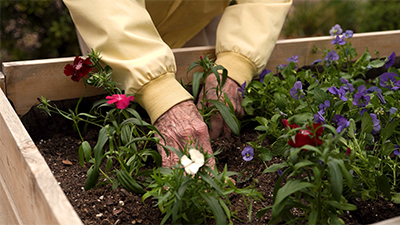
Activity in a little home hardly ever appears like an official "calendar" with color coded events, however that does not mean locals sit idle. Engagement tends to mix with home life: folding towels, snapping green beans, watering plants, sorting pictures, sweeping a deck. Many of these jobs are not hectic work. They reconnect people with long held roles as parents, hosts, workers, or homemakers.
Afternoons might involve brief walks in a fenced yard, seated exercises, or music. I have actually seen residents who could hardly recall their grandchildren's names sing entire verses of songs from their twenties. Staff who comprehend that power keep music close at hand.
Evenings are generally quieter, which fits the requirements of individuals who tire quickly and might experience sundowning. Lights are decreased, tv shows are picked carefully to avoid violence or confusing plots, and bedtimes follow individual rhythms when possible. Because there are less citizens to monitor, caregivers can more quickly respond to individual requirements as they arise.
From the outside, this can look uneventful. From the within, that steady, predictable life is exactly what many people with dementia need.
Safety and supervision in a smaller footprint
Families often worry that a little assisted living home will be "too informal" to be safe. That stress and anxiety is reasonable. The ideal questions will tell you whether a home has thoughtful systems or is just winging it.
In well run little homes, doors and gates are protected in manner ins which appreciate personal privacy while avoiding risky roaming. Alarms, chimes, and visual hints assist personnel notification when somebody approaches an exit. Floorings are normally level, with minimal limits and mess. Restrooms have grab bars, raised toilets, and shower chairs as needed.
Staffing ratios differ by state and by time of day, however lots of dementia focused homes aim for one caretaker for each 3 to 5 residents throughout waking hours, and one overnight caretaker for the entire home. Some homes include a "floater" personnel who covers meals and individual care during peak times.
Critically, because the physical environment is small, a single caretaker can typically see or hear most of the home without leaving anybody totally not being watched. Contrast that with a big building, where a fall at the end of a long hallway might go unnoticed for a number of minutes if call systems fail or a resident can not reach a pull cord.
Medication management is another pivotal security concern. In certified assisted living or memory care settings, medications are saved safely and administered on a schedule, frequently by specifically trained staff or under nurse guidance. Residential homes that supply dementia care ought to follow similar requirements, with clear logs, double checks for high threat drugs, and interaction with family and prescribers.
The simpleness of a small home does not replace policy. You still want to see up to date licenses, assessment reports, and written policies. The distinction is that in a small setting, policies tend to be lived out completely view, instead of buried in a manual.
The psychological impact on families
One of the hardest parts of moving a loved one into any senior care setting is the sense of giving up, of failing to keep a guarantee about "never ever putting you in a home." I in some cases want we might retire that phrase totally. It records a worry, not a practical long-lasting plan for an illness that can last ten or more years.
Small assisted living homes can soften some of that psychological weight. Walking into a genuine house, sitting at a genuine kitchen area table, seeing your mom's quilt on her bed rather of a medical facility design spread, all of that alters the narrative. Households frequently say, "I feel like I am visiting her at a friend's home."
For adult children who still work or care for their own kids, a smaller sized environment can likewise make interaction simpler. You are familiar with all the personnel quickly. They recognize your number when you call, and you understand who is likely to address the door when you knock at 7 pm on a Thursday. Issues can be attended to on the spot rather than routed through layers of management.
There is likewise relief. When 24 hr supervision, specialized dementia care, and routine jobs like bathing and medication are dealt with by professionals, family visits can focus more on connection than crisis management.
That does not imply the relocation is painless or that guilt vanishes. But a setting that feels familiar and human sized typically makes the transition gentler for everyone.
Cost, accessibility, and monetary trade offs
For families, finances typically drive the final option more than care approach. Little homes do not exist in every area, and where they do, rates vary widely.
In numerous markets, residential assisted living or little memory care homes charge rates equivalent to mid variety assisted living communities, in some cases slightly lower, often a little higher. Monthly costs often fall somewhere between private duty home care for 8 to twelve hours a day and 24 hour home care, which rapidly becomes unaffordable for a lot of families.
The primary elements behind cost include:
- Staffing ratios and whether there is awake over night care
- Level of dementia care provided, specifically for behaviors or complicated medical needs
- Location and real estate expenses
- Whether services like incontinence materials, transportation, and cable television are bundled or billed individually
Some long term care insurance policies cover care in certified assisted living facilities, consisting of small homes if they meet state criteria. Medicaid protection differs substantially. In some states, waiver programs partially fund assisted living or memory look after eligible individuals. In others, alternatives are minimal or waiting lists are long.
Availability can be a barrier. A city may have lots of big assisted living structures but just a handful of little, certified residential care homes that truly concentrate on dementia care. Those homes often run near capacity, with wait lists.
For families in rural areas, travel range matters too. The perfect home 90 minutes away might be less practical than an excellent home 15 minutes away, especially if you wish to visit frequently or need to respond rapidly in a crisis.
Financial preparation for dementia care hardly ever follows a neat linear path. Many households blend alternatives with time: in the house care and respite care early on, then a small assisted living home or memory care neighborhood as needs intensify, and lastly hospice services layered in towards completion of life. Thinking in phases instead of "one permanent solution" can ease a few of the pressure.
When a little home is an especially strong fit
Not everyone with dementia is finest served in a little residence. Some prosper in larger memory care systems with more structured activities, on website centers, and a sense of "hustle" that matches their outgoing personalities.
From experience, individuals who often do exceptionally well in a little, familiar assisted living home are those who:

- Become quickly overwhelmed by sound, crowds, or complex environments.
- Already program significant disorientation in new locations, even on brief visits.
- Have a long history of valuing home, routine, and intimate social circles over huge gatherings.
- Need close supervision for safety but become afraid or agitated in clinical environments.
- Have households who wish to remain associated with day to day decisions and communication.
On the other hand, someone in the extremely early phases of dementia who is still driving locally, handling standard self care, and craving social chances might feel restricted in a six bed home. For that individual, a bigger assisted living neighborhood with great memory care support may offer a better balance.
Similarly, a person with very complex medical needs, such as frequent intravenous treatments or ventilator support, might require a knowledgeable nursing center no matter cognitive status. Little residential homes are usually created for assisted living level requires: assist with bathing, dressing, medications, continence, and mobility, but not extensive medical interventions.
Matching individual, illness phase, and environment is difficult, and it is fine to revisit the decision as situations change. A small home that feels perfect at moderate phase may no longer be able to handle late phase signs securely, especially if aggressive habits or advanced medical concerns develop.
Using respite care to "try on" a small home
For families who are unsure about a move, respite care can be a useful bridge. Many assisted living and memory care service providers, consisting of some small homes, provide short term remains varying from a few days to a couple of weeks. These can cover caregiver trips, hospital discharges, or trial periods.
A respite remain in a little dementia focused home offers you real data. You can see how your loved one responds to the environment, whether they settle fairly well after a few days, and how personnel manage challenging moments. You also get a taste of life without 24 hr obligation, which can clarify your own requirements and limits.
Not every home offers respite, especially if they run near full tenancy. Some reserve a single space for short-term visitors, while others will just provide respite when an irreversible bed takes place to be empty. If respite care is necessary to you, inquire about it early when you start touring.
Even if a respite stay is not available, spending time in the home beyond a quick tour assists. Visit during a meal, drop in in the late afternoon when locals are most exhausted, and watch interactions. The quieter the marketing, the more the everyday reality shows.
What to try to find when you tour a little dementia care home
When you step within, your first impressions matter, however dig much deeper than paint colors and flowers on the porch. Simple lists can help keep ideas straight later.
Here is a short one you can bring in your pocket:
- Smell: Does the home odor reasonably tidy, without heavy air fresheners attempting to mask smells?
- Sound: Is the volume of television, conversations, and devices low enough for someone with dementia to endure?
- Staff: Do caretakers understand locals by name, and do they consult with them, not over them?
- Safety: Are floorings clear of mess, bathrooms geared up with fundamental safety equipment, and doors secured properly?
- Engagement: Are locals simply parked in front of a television, or are at least some involved in basic, meaningful activities?
After the tour, ask yourself how you felt being in the living room for fifteen minutes. Could you picture your loved one because space, on a typical Tuesday afternoon, week after week? Your body's action typically catches things your brain tries to justify away.
Bringing familiarity into any senior care setting
Even if a small assisted living home is not readily available or not the ideal fit, you can still apply the power of familiarity in bigger assisted living, memory care, or nursing home settings.
Bring in individual products that activate long term memory: household pictures from years back, a favorite blanket, a familiar design of lamp, the very same brand of toiletries and lotion. Re develop bedtime or mealtime rituals as much as possible. If dad always shaved after breakfast, talk with personnel to keep that timing.
Share comprehensive life history with caregivers. What work did your loved one do? What foods did they delight in or do not like? What relaxes them when they are distressed? The more personnel can weave familiar styles into everyday care, the less alien the brand-new environment will feel.
Familiarity is not restricted to physical objects. It lives in voices, rhythms, jokes, and little duplicated gestures. Whether in a 6 bed home, a hundred bed memory care neighborhood, or at home with limited assistance, those threads can anchor an individual whose mind has ended up being unsteady ground.
Choosing take care of somebody with dementia is less about discovering the best building and more about discovering a location where the person can still acknowledge themselves. Small assisted living homes that specialize in dementia care usage intimacy and familiarity as their main tools. For many, that method transforms senior care from a series of transactions into an every day life that still feels individual and knowable.
The choice is rarely basic. It unfolds over discussions, trips, nights of worry, and truthful recommendations of what you can and can refrain from doing alone. Comprehending how small, familiar environments work gives you another solid alternative to consider, and in some cases, that alternative makes all the difference.
BeeHive Homes of Farmington provides assisted living care
BeeHive Homes of Farmington provides memory care services
BeeHive Homes of Farmington provides respite care services
BeeHive Homes of Farmington supports assistance with bathing and grooming
BeeHive Homes of Farmington offers private bedrooms with private bathrooms
BeeHive Homes of Farmington provides medication monitoring and documentation
BeeHive Homes of Farmington serves dietitian-approved meals
BeeHive Homes of Farmington provides housekeeping services
BeeHive Homes of Farmington provides laundry services
BeeHive Homes of Farmington offers community dining and social engagement activities
BeeHive Homes of Farmington features life enrichment activities
BeeHive Homes of Farmington supports personal care assistance during meals and daily routines
BeeHive Homes of Farmington promotes frequent physical and mental exercise opportunities
BeeHive Homes of Farmington provides a home-like residential environment
BeeHive Homes of Farmington creates customized care plans as residents’ needs change
BeeHive Homes of Farmington assesses individual resident care needs
BeeHive Homes of Farmington accepts private pay and long-term care insurance
BeeHive Homes of Farmington assists qualified veterans with Aid and Attendance benefits
BeeHive Homes of Farmington encourages meaningful resident-to-staff relationships
BeeHive Homes of Farmington delivers compassionate, attentive senior care focused on dignity and comfort
BeeHive Homes of Farmington has a phone number of (505) 591-7900
BeeHive Homes of Farmington has an address of 400 N Locke Ave, Farmington, NM 87401
BeeHive Homes of Farmington has a website https://beehivehomes.com/locations/farmington/
BeeHive Homes of Farmington has Google Maps listing https://maps.app.goo.gl/pYJKDtNznRqDSEHc7
BeeHive Homes of Farmington has Facebook page https://www.facebook.com/BeeHiveHomesFarmington
BeeHive Homes of Farmington has an YouTube page https://www.youtube.com/@WelcomeHomeBeeHiveHomes
BeeHive Homes of Farmington won Top Assisted Living Home 2025
BeeHive Homes of Farmington earned Best Customer Service Award 2024
BeeHive Homes of Farmington placed 1st for Senior Living Communities 2025
People Also Ask about BeeHive Homes of Farmington
What is BeeHive Homes of Farmington Living monthly room rate?
The rate depends on the level of care that is needed (see Pricing Guide above). We do a pre-admission evaluation for each resident to determine the level of care needed. The monthly rate is based on this evaluation. There are no hidden costs or fees
Can residents stay in BeeHive Homes until the end of their life?
Usually yes. There are exceptions, such as when there are safety issues with the resident, or they need 24 hour skilled nursing services
Do we have a nurse on staff?
Yes. Our administrator at the Farmington BeeHive is a registered nurse and on-premise 40 hours/week. In addition, we have an on-call nurse for any after-hours needs
What are BeeHive Homes’ visiting hours?
Visiting hours are adjusted to accommodate the families and the resident’s needs… just not too early or too late
Do we have couple’s rooms available?
Yes, each home has rooms designed to accommodate couples. Please ask about the availability of these rooms
Where is BeeHive Homes of Farmington located?
BeeHive Homes of Farmington is conveniently located at 400 N Locke Ave, Farmington, NM 87401. You can easily find directions on Google Maps or call at (505) 591-7900 Monday through Sunday 9:00am to 5:00pm
How can I contact BeeHive Homes of Farmington?
You can contact BeeHive Homes of Farmington by phone at: (505) 591-7900, visit their website at https://beehivehomes.com/locations/farmington/,or connect on social media via Facebook or YouTube
Conveniently located near Beehive Homes of Farmington Allen Theaters a great movie theater with full food & drink menu. Catch a movie and enjoy some great food while you wait.